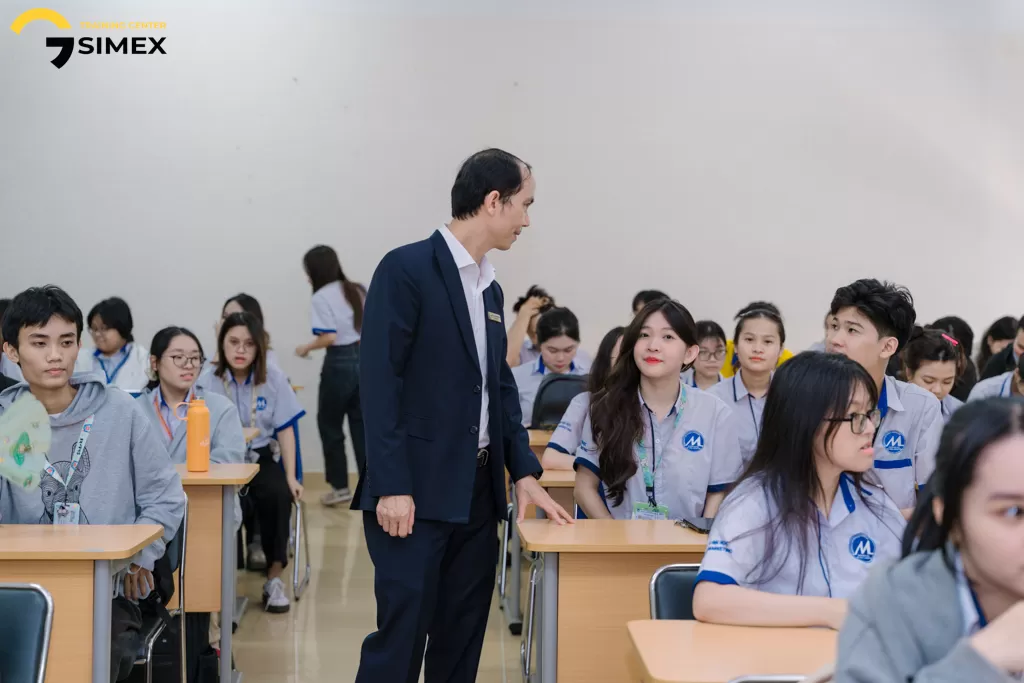

On July 12, 2025, the Saigon Import-Export Center (SIMEX), in coordination with the Faculty of Commerce, University of Finance and Marketing (UFM), successfully organized a specialized report session with the theme "Digital Transformation in Import-Export Procedures for Goods – Current Situation and Requirements for International Trade Specialists." The event attracted the interest of over 200 students from the Faculty of Commerce.
During the report, Mr. Le Thanh Tung, MA, Deputy Director of SIMEX Center and the program’s speaker, shared practical experiences regarding digital transformation in import-export procedures for goods. Mr. Tung also addressed students’ questions about the requirements for international trade specialists in the new context.
This specialized talk provided deep insights into the concept and benefits of digital transformation in the import-export sector:
The concept of Digital Transformation in import-export procedures for goods is the process of applying digital technology to improve, optimize, and automate import-export related processes. The goal is to reduce paperwork, enhance efficiency and transparency, and promote the development of e-commerce and logistics.
Digital transformation brings numerous outstanding benefits:
-
Increased work efficiency and reduced costs: Automating processes like customs declarations, payments, and goods tracking helps reduce time, costs, errors, and accelerates transaction speed.
-
Facilitating e-commerce: Enables businesses to access global markets through e-commerce platforms like Amazon and Alibaba, expanding their network of customers and partners.
-
Improved transparency and reduced fraud: Technology and smart management systems help track and verify goods information accurately, enhancing reliability and reducing the risk of fraud.
-
Enhanced competitiveness: Businesses can optimize processes, reduce costs, and provide better services, thereby improving their competitiveness in the international market.
-
Promoting the development of the Logistics industry: Helps optimize transportation processes, warehouse management, and goods tracking, creating a smarter and more efficient logistics system.
The current situation shows that the application of technology in import and export is rapidly progressing, simultaneously posing new requirements for international trade specialists:
-
Enhance digital competency: Specialists need to acquire knowledge and skills in information technology, online platforms, and data management tools.
-
Adapt to new work processes: They need to become familiar with digitized import-export processes, electronic customs procedures, and online payment methods.
-
Ensure data security and safety: Specialists must be aware of cybersecurity, protecting personal and business information during online transactions.
-
Grasp market trends: They need to monitor technological developments, market trends, and new legal regulations to adapt and propose suitable solutions.
-
Cooperation and information sharing: Specialists need to cooperate closely with relevant departments, domestic and international partners, and service providers to ensure efficient and secure import-export processes.
This specialized report session was a valuable opportunity for students to gain practical knowledge and acquire essential skills for their future careers.
SIMEX Center sincerely thanks the Faculty of Commerce, University of Finance and Marketing (UFM), for their cooperation in successfully organizing this report, which helped motivate students to pursue this promising international business field